Health and Safety Policy for Landscaping Stokenewington
 Health and safety is central to every landscaping project, from routine garden maintenance to larger outdoor transformations. This policy sets out the standards expected when planning, carrying out, and reviewing landscaping work in Stokenewington. Its purpose is to reduce risk, protect workers, safeguard clients and visitors, and ensure that all activities are completed in a controlled and responsible way. Every task should begin with a clear understanding of potential hazards, the correct equipment, and the safe methods needed to manage the work effectively.
Landscaping tasks can involve manual handling, powered tools, excavation, working at height, exposure to weather, and contact with moving vehicles or uneven ground. Because of this, a safe working environment must be considered before any work starts. All operatives are expected to act with care, follow instructions, and use good judgement at all times. The aim is not only to prevent accidents, but also to support consistent, professional standards across every job.
 This policy applies to all employees, subcontractors, and any other individuals involved in landscaping operations. It covers risk assessment, site preparation, personal protective equipment, tool handling, emergency response, and incident reporting. Managers are responsible for ensuring that staff are competent for the tasks assigned to them, while workers must cooperate fully with safety procedures and raise concerns immediately if conditions become unsafe.
Core Safety Principles
Before work begins, a suitable assessment should be completed to identify hazards and decide what measures are required. This may include checking ground stability, locating hidden services, reviewing access routes, and considering whether weather conditions could affect safety. The assessment should be proportionate to the job, and any significant risks must be addressed before work proceeds. Where necessary, work should be paused until conditions improve or additional controls are put in place.
All landscaping activities should follow the principle of prevention. This means selecting safer methods where possible, using the right equipment for the task, and avoiding rushed or improvised approaches. In practice, this may involve using mechanical aids for heavy lifting, maintaining clear work areas, and keeping tools stored safely when not in use. Good housekeeping is essential, as loose materials, trailing cables, and waste can quickly create avoidable hazards.
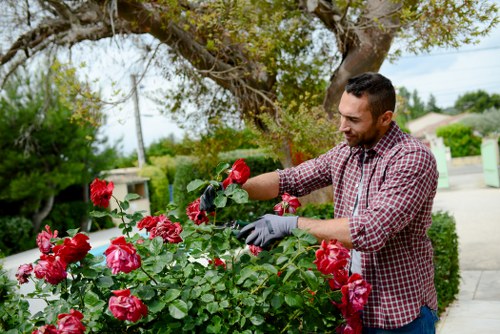
 Personal protective equipment must be worn when required and maintained in good condition. Depending on the task, this may include gloves, safety footwear, eye protection, hearing protection, high-visibility clothing, or respiratory protection. Equipment should be selected to match the hazard and the work being performed. It is important that PPE is not treated as a substitute for safe planning; it should be used alongside proper controls, training, and supervision.
Working Practices and Responsibilities
Safe landscaping depends on clear communication and consistent supervision. Everyone involved should know the scope of the work, the sequence of tasks, and any site-specific restrictions. When machinery or powered tools are used, only trained and authorised persons should operate them. Equipment must be inspected before use, and any defects should be reported immediately and taken out of service until repaired or replaced. This applies equally to mowers, trimmers, blowers, cutting tools, and other items used in routine landscaping services.
Manual handling should be planned carefully to avoid strain or injury. Loads should be reduced where possible, lifting techniques should be safe, and assistance or mechanical support should be used for heavier or awkward items. Workers should not attempt tasks that exceed their capability or the safe limits of the equipment available. In addition, care must be taken around water features, slopes, hard surfaces, and areas where visibility is reduced. A cautious approach is always preferable to forcing work through unsafe conditions.
Children, pets, residents, and site visitors should be protected from work activities at all times. Where necessary, barriers, signage, or controlled access arrangements should be used to prevent unauthorised entry into work zones. Materials, tools, and waste should never be left in a position where they could cause injury.  If work involves cutting, digging, or the use of machinery, the area should be monitored carefully and kept free of distractions.
Emergency Procedures, Reporting, and Review
Emergency arrangements must be understood before work starts. This includes knowing how to summon help, how to respond to injury, and what to do in the event of fire, power failure, severe weather, or accidental damage to property or services. First aid supplies should be available where appropriate, and workers should be familiar with the steps to take if an incident occurs. Swift action can reduce harm and help ensure that situations are handled in a calm and organised manner.
All accidents, near misses, dangerous occurrences, and equipment failures should be reported without delay. Reporting is essential because it helps identify recurring hazards and supports continuous improvement. Records should be kept where required, and investigations should focus on learning rather than blame. If a pattern of risk is identified, the work method should be reviewed and revised promptly. This process reinforces a strong landscape safety culture and helps prevent repeat incidents.
 This policy will be reviewed periodically and updated when work methods, equipment, or risk levels change. Everyone involved in the delivery of landscaping work is expected to understand and follow the policy, to act responsibly, and to contribute to a workplace culture that values safety. By combining planning, competence, communication, and care, Landscaping Stokenewington can maintain high standards while protecting people and property in every project.